
GST
Registration, returns, e-invoicing, ITC, rate notifications, and compliance strategy.
GST TCS for E-commerce Operators Under Section 52
E-commerce operators collect GST TCS on sellers' net taxable supplies and report it in GSTR-8. The rate, how sellers claim the credit, and fixing mismatches.

ASMT-10 Notice: How to Reply to GST Return Discrepancies
An ASMT-10 notice flags mismatches in your GST returns. What it means, how to reply in ASMT-11 within 30 days, and how to avoid escalation to a demand notice.
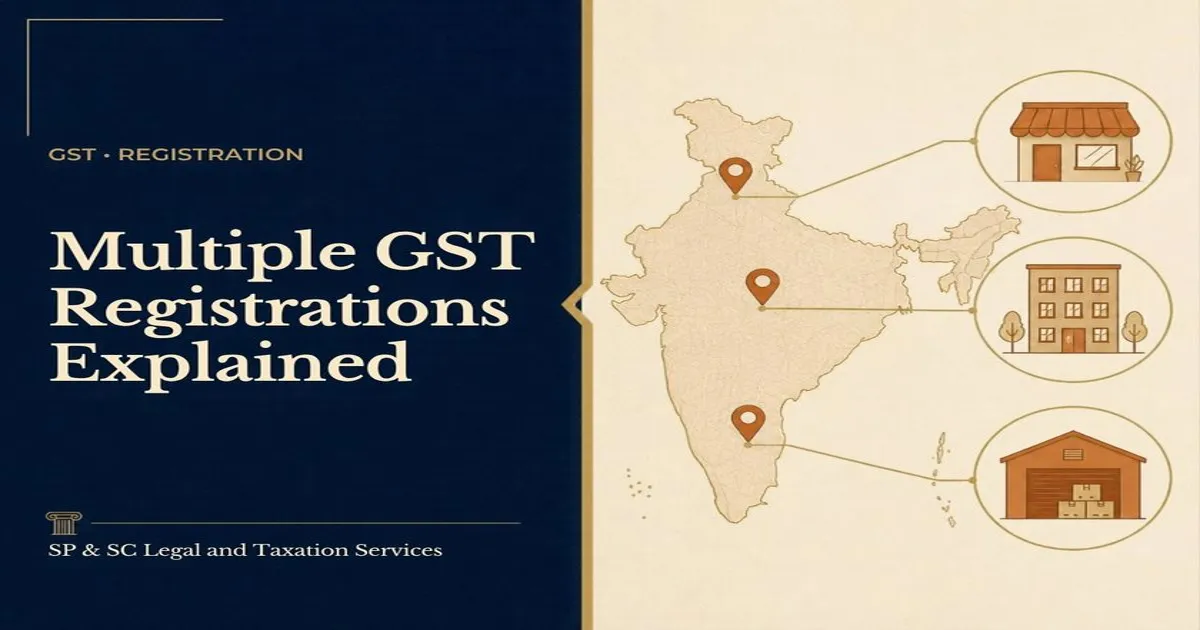
Multiple GST Registrations: Branches, Warehouses and Additional Places
GST registration is state-wise. When a new branch needs a separate GSTIN, when to add an additional place of business, and how inter-branch supplies are taxed.
How Discounts Are Treated Under GST
Discounts on the invoice reduce GST value. Post-sale discounts do so only if agreed in advance and linked to invoices. Section 15(3), credit notes and a worked example.
GST Reverse Charge on Security and Manpower Services
If your business hires a security agency that isn't a company, you must pay the GST under RCM. Our guide explains the rules and how to comply correctly.
GST Show Cause Notice Under Section 73 and 74
A GST show cause notice (SCN) under Section 73 or 74 alleges unpaid tax. Section 73 is for non-fraud cases; Section 74 is for fraud. Responding correctly is key.
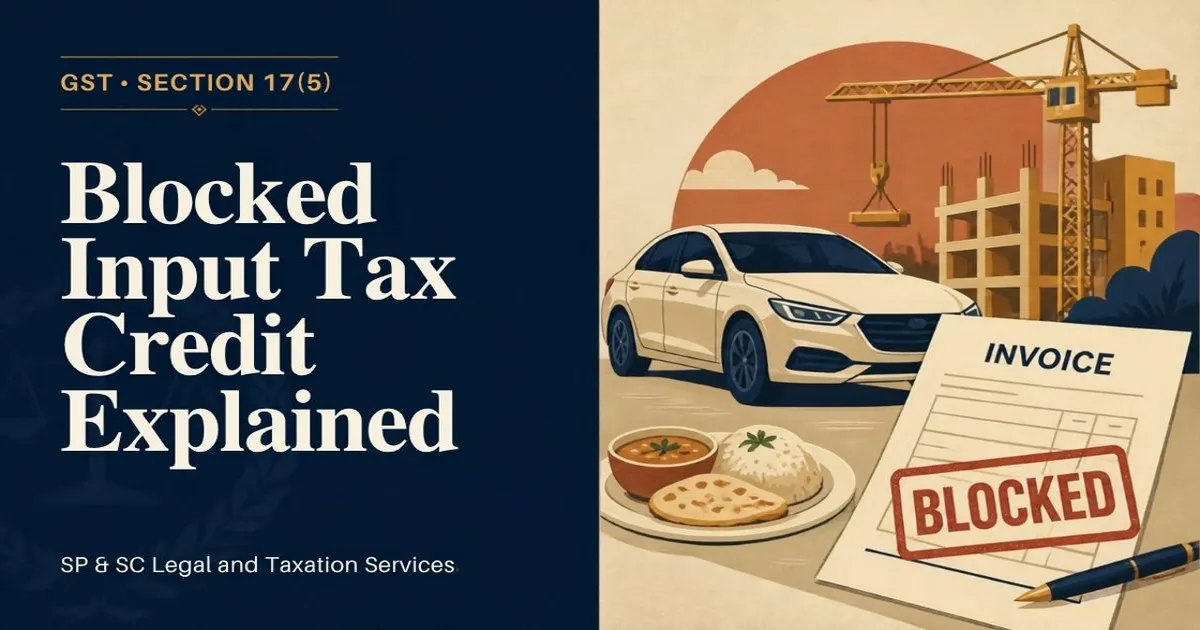
Blocked Input Tax Credit under Section 17(5): Cars, Food, Construction and More
The GST credits you can never claim — motor vehicles, food and beverages, club memberships, construction of immovable property — with the exceptions that matter.
ITC on Capital Goods Under GST
Businesses can claim Input Tax Credit (ITC) on capital goods like machinery and computers under GST. This guide explains the rules, conditions, and how to claim it in your GSTR-3B.
GST Checklist for Startups in Their First Year
Our essential GST checklist for first-year startups covers when to register, how to issue correct invoices, which returns to file, and how to claim ITC.
GST on Advances Received: Goods vs Services and Refunds
GST applies on advances for services at the time of receipt, but not on advances for goods since 2017. Receipt vouchers, adjustments and what to do if the deal is cancelled.

GST on Free Samples, Gifts and Promotional Items
Learn the GST treatment for free samples, gifts, and 'Buy One, Get One' offers. If you claim Input Tax Credit (ITC) on goods given for free, you must reverse it.

GST Physical Verification and Aadhaar Authentication
Learn why GST officers conduct physical verification of your business premises and how Aadhaar authentication can speed up your GSTIN allotment in 2026.
GSTR-2B Reconciliation: How to Match Your Input Tax Credit
Since Rule 36(4), you can claim ITC only if it shows in GSTR-2B. A step-by-step reconciliation process, common mismatches and how to fix them.
GST on Flats: 1% Affordable, 5% Others — and Why Ready-to-Move Homes Have No GST
GST on residential property explained: 1% and 5% rates without ITC, the affordable-housing test, the one-third land deduction, and when no GST applies at all.
GST on Residential Rent Paid by Registered Businesses
If your GST-registered business rents a residential property for an employee, you must pay 18% GST under the Reverse Charge Mechanism (RCM).
ITC Reversal if Supplier Not Paid Within 180 Days
If you claim GST Input Tax Credit (ITC) on an invoice but fail to pay the supplier within 180 days, you must reverse the ITC and pay interest. Learn how to comply and reclaim the credit.
GST Advance Ruling: When to Apply
A GST Advance Ruling provides legal certainty on the tax treatment of a proposed transaction before you undertake it, helping you avoid costly disputes with the tax department.

GST on Education, Coaching and Online Courses
Most educational services from schools are GST-exempt. However, private coaching, professional training, and most online courses attract 18% GST. Know the rules.
GST Valuation for Related Party and Branch Transfers
GST is levied on supplies to related parties and branches even without payment. Correct valuation is crucial for compliance. Learn how to apply the GST valuation rules.
GST Threshold for Service Providers: ₹20 Lakh Rule
The general GST registration threshold for service providers in India is an aggregate turnover of ₹20 lakh. If your annual turnover exceeds this limit, you must register.
GST Invoice Format: Mandatory Fields Under Rule 46
A compliant GST invoice is crucial for your business. It must contain specific details like GSTINs, HSN codes, and tax breakdowns as mandated by Rule 46 of the CGST Rules.
GST Registration Rejected: Common Reasons and How to Reapply
Facing a GST registration rejection? Understand the common reasons, correct your documents, and learn how to reapply using Form GST REG-01 with our expert guide.
Bill of Supply vs Tax Invoice Under GST
A Tax Invoice is for taxable supplies and allows ITC claims. A Bill of Supply is for exempt supplies or by composition dealers, with no GST and no ITC.
Filing a GST Appeal: APL-01, Pre-Deposit and Time Limits
To appeal a GST order, file Form GST APL-01 within three months with a mandatory pre-deposit of 10% of the disputed tax amount. Learn the full process.
GST on Import of Services: IGST Under Reverse Charge
When an Indian business imports services, it must pay IGST under Reverse Charge (RCM). Learn who is liable, how to calculate the tax, and how to claim ITC.
E-Way Bill Penalties and Vehicle Detention Under Section 129
Failure to carry a valid e-way bill can lead to detention of your goods and vehicle, plus a hefty penalty equal to 200% of the tax payable under Section 129.
Time of Supply Under GST for Goods and Services
Learn the critical concept of Time of Supply under GST. This determines when GST is payable for goods and services, impacting your cash flow and compliance.
Fake GST Invoices: Risks for Genuine Buyers
A fake GST invoice can lead to denied Input Tax Credit (ITC), hefty penalties, and even prosecution. Learn how genuine businesses can protect themselves from fraud.
Input Service Distributor (ISD) Registration Under GST
An Input Service Distributor (ISD) helps businesses with multiple GSTINs distribute common input service credits. Learn about mandatory registration and compliance.
GST Registration Suspended: Why and How to Restore
GST registration can be suspended for non-filing of returns or other violations. This guide explains the common reasons and the exact process to restore your GSTIN.
GST on Software and SaaS: Rates and Place of Supply
Understand the correct GST rate (18%) on software and SaaS in India. Learn how to determine the place of supply for domestic and international clients to avoid compliance issues.
Amending GST Registration: Address, Partners and Business Name
A step-by-step guide for businesses to amend their GST registration online, covering changes in address, business name, partners, and bank accounts.
GST on Director Remuneration and Sitting Fees
Is GST applicable on payments to directors? Remuneration to employee directors is exempt, but fees to non-executive directors attract GST under Reverse Charge.
QRMP Scheme: Quarterly Filing with Monthly Payment
Who can opt into QRMP, IFF mechanics, PMT-06 monthly payment, and the fixed-sum method.
GST Registration Fees: Government vs Advisory Charges
The government charges nothing for GST registration — here's what advisory fees actually cover.
GST Late Fee and Interest: Section 47, 50, and Notification Reliefs
Late fee caps, Section 50 interest at 18% and 24%, and recurring amnesty schemes.
GST Interest on Late Payment: Net Cash Liability Rule
GST interest on late payment is charged at 18% p.a. on the net tax paid in cash. This guide explains the calculation, common mistakes, and how to avoid penalties.
GST Audit and Scrutiny: What to Expect Under Sections 65 and 61
Section 61 scrutiny of returns vs Section 65 departmental audit — timelines, notices, and preparation.
Place of Supply Under GST: IGST vs CGST+SGST
Determining the Place of Supply is crucial under GST. It decides whether you charge IGST (inter-state) or CGST+SGST (intra-state) on your sales.
GST for E-commerce Sellers: Section 52 TCS and Compulsory Registration
Section 52 TCS, TCS reconciliation, compulsory registration under Section 24, and marketplace mechanics.
GST Cancellation and Revocation: When and How
Voluntary vs suo-moto cancellation, Section 29 grounds, and how to revoke a cancellation.
Form DRC-03: Paying GST Voluntarily
Form DRC-03 is a GST challan for voluntarily paying tax liabilities found during reconciliation or before a notice. Use it to pay tax, interest, or penalties.
GST Refund Process: Types, Timelines, and Documents
Refund types (exports, inverted duty, excess balance), RFD-01 flow, and the 60-day statutory clock.
GST on Rent: Residential vs Commercial and the RCM Twist
The 18% GST on commercial rent, RCM on renting from unregistered persons, and residential exemptions.
GST for Freelancers and Consultants: Registration and Return Filing
When freelancers must register, invoicing to Indian and overseas clients, and LUT for exports.
HSN Code Search: How to Find the Right Code for Your Product
HSN structure, GST rate mapping, and why the wrong 6-digit code triggers scrutiny.
How to Verify a GSTIN: Format, Portal Lookup, and Red Flags
Decoding the 15-digit GSTIN structure, portal verification, and spotting fake GST numbers.
Voluntary GST Registration: Pros and Cons for Small Businesses
Businesses below the turnover threshold can opt for voluntary GST registration. This allows claiming Input Tax Credit and working with larger B2B clients but adds compliance tasks.
GSTR-9 Annual Return: Reconciliation and Section-wise Reporting
Who must file GSTR-9, the ₹2/₹5 crore triggers, and the interaction with 9C reconciliation.
Reverse Charge Mechanism Under GST: Notified Categories
Section 9(3) and 9(4) RCM triggers — GTA, legal services, unregistered supplier purchases, and self-invoicing.