
Property Title Verification: The 30-Year Chain of Title
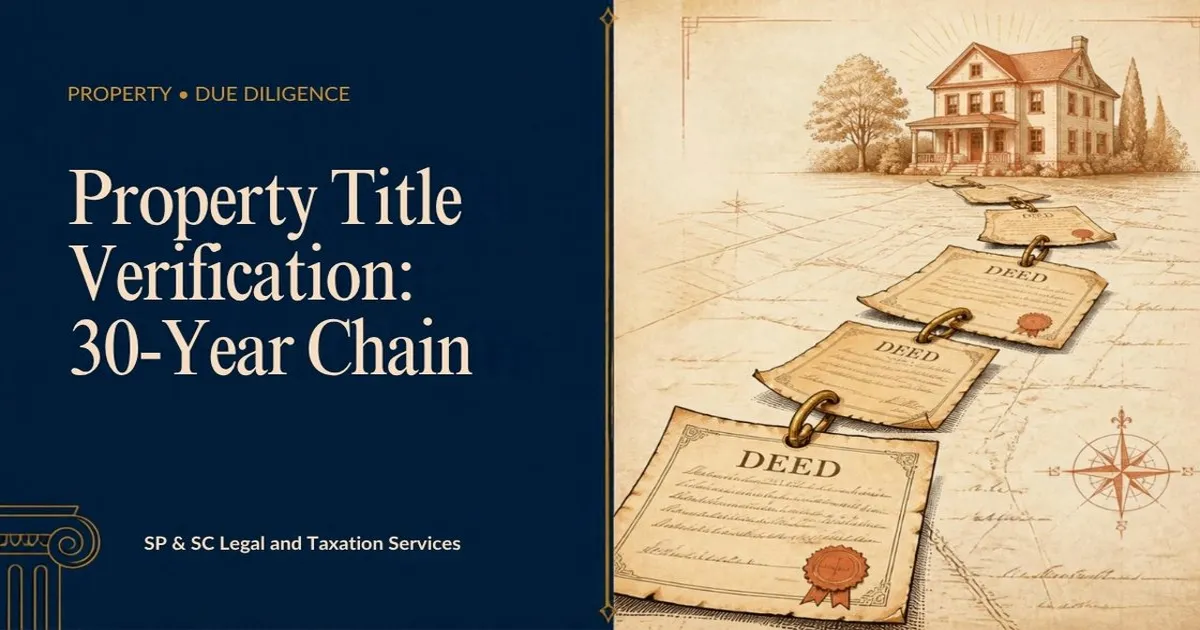
Mother deed, EC 30-year search, mutation, khata, and lawyer's opinion — the paperwork trail to trust.
Property Title Verification: The 30-Year Chain of Title
Verifying property title in India is crucial to ensure a clear, marketable ownership. The "30-year chain of title" refers to scrutinising ownership records for the past three decades to identify any disputes, encumbrances, or gaps. This diligent process, involving a lawyer, safeguards your investment by confirming the seller's legal right to transfer the property, preventing future legal complications and financial losses.
Why is property title verification important?
Property title verification is paramount because it establishes the legal ownership of a property, ensuring you are purchasing from the rightful owner and that the property is free from any hidden liabilities or disputes. Without proper verification, you risk investing in a property with defective title, leading to potential loss of money, protracted legal battles, and inability to enjoy or resell the property. It's your primary defence against fraud and ensures a smooth, secure transaction.
What is a Mother Deed and why is its chain important?
A Mother Deed is the primary legal document establishing the first transfer of ownership from the original owner to the first buyer, forming the root of the property's title. The "chain of title" refers to the chronological sequence of all subsequent ownership transfers, from the Mother Deed right up to the current seller. Examining this chain is critical to ensure every transfer was legally sound, properly registered, and that there are no missing links or breaks in ownership, which could indicate a defective title. Each link in the chain, including sale deeds, gift deeds, partition deeds, and wills, must be scrutinised for authenticity and legal validity.
What is an Encumbrance Certificate and why is a 30-year check necessary?
An Encumbrance Certificate (EC) is a document issued by the Sub-Registrar's office that certifies whether a property is free from monetary and legal liabilities, such as mortgages, leases, or pending legal disputes, for a specified period. A 30-year check of the EC is necessary because it provides a comprehensive historical record of transactions and encumbrances affecting the property over three decades. While a shorter period might seem sufficient, many legal limitations and claims can extend beyond 12 or 15 years. A 30-year EC offers a robust assurance that no long-standing, undisclosed liabilities or third-party claims exist, thereby protecting the buyer from unforeseen legal challenges.
How do Khata and Mutation records impact title verification?
Khata and Mutation records are essential administrative documents that reflect the property's current ownership and assessment for property tax purposes, directly impacting title verification.
- Khata: In Karnataka, particularly Bengaluru, Khata is a revenue document issued by municipal authorities like BBMP or BDA. It identifies the owner responsible for paying property tax and describes the property (area, location, boundaries). There are two types: Khata A (for legally constructed properties) and Khata B (for properties in violation of bylaws). A property with a clear Khata A is generally preferred.
- Mutation: Mutation is the process of updating ownership records in the land revenue department whenever there's a transfer of property (e.g., sale, inheritance, gift). It's crucial because it reflects the change of ownership in government records, allowing the new owner to pay property taxes and apply for utilities.
While Khata and Mutation do not confer title themselves, they are strong indicators of ownership and possession. Discrepancies between the sale deed and Khata/Mutation records can signal potential issues with the property's title or legal status, necessitating further investigation. For instance, if the seller's name isn't reflected in the latest mutation records, it raises a red flag.
Why is BBMP/BDA plan sanction important for property verification?
BBMP (Bruhat Bengaluru Mahanagara Palike) or BDA (Bengaluru Development Authority) plan sanction is crucial because it confirms that the construction on the property adheres to local building bylaws, zoning regulations, and approved architectural plans. A sanctioned plan ensures the building is legally constructed and not subject to demolition notices, penalties, or regularisation fees.
- Legality of Construction: Without a sanctioned plan, the construction is considered illegal, making the property vulnerable to action by municipal authorities.
- Future Saleability: Banks typically do not provide loans for properties without approved plans, severely impacting future saleability.
- Occupancy Certificate: An Occupancy Certificate (OC), which is essential for legal occupation, is only issued if the construction aligns with the sanctioned plan.
Verifying the plan sanction ensures the physical structure of the property is legally sound, complementing the legal verification of the land's title.
What is a Lawyer's Title Opinion and why is it indispensable?
A Lawyer's Title Opinion is a formal legal document prepared by an experienced property lawyer after thoroughly examining all relevant property documents, including the Mother Deed, chain of title, Encumbrance Certificates, Khata, Mutation records, and plan sanctions. It states the lawyer's professional assessment of the property's title, confirming whether it is clear, marketable, and free from defects or encumbrances.
It is indispensable because:
- Expert Analysis: Lawyers possess the expertise to interpret complex legal documents, identify subtle defects, and understand the implications of various legal provisions.
- Risk Mitigation: It provides an independent, objective assessment of risks associated with the property, safeguarding the buyer from potential legal disputes or financial losses.
- Bank Requirement: Banks and financial institutions invariably require a lawyer's title opinion before sanctioning home loans, as it assures them of the security of their collateral.
- Peace of Mind: Ultimately, it offers peace of mind to the buyer, knowing that their significant investment is legally sound.
Comparison of Key Property Documents
| Document Type | Purpose | Issued By | Key Information Provided | Importance for Title Verification | | Mother Deed | Traces the property's origin and initial ownership transfer. | Sub-Registrar's Office | Original owner, first buyer, property description, date of transfer. | Crucial: Forms the base of the title chain. Essential to establish legitimate ownership from the very beginning. | | **Chain of Title | Proves the uninterrupted legal transfer of ownership over time. | Sub-Registrar's Office (via historical deeds) | Sequence of all registered ownership transfers (Sale Deeds, Gift Deeds, Wills, etc.). | Crucial: Establishes legal continuity. Any break or missing link indicates a potential title defect. | | Encumbrance Certificate | Provides a historical record of transactions and liabilities on a property. | Sub-Registrar's Office | Details of sales, mortgages, leases, gifts, or other encumbrances registered against the property for a specified period (e.g., 30 years). | Crucial: Reveals any undisclosed liabilities or claims that could affect the buyer's ownership. A clean EC is vital. | | **Khata (e.g., A Khata)| Identifies the property owner for municipal tax purposes; certifies legality of construction. | BBMP/BDA or local municipal body | Owner's name, property ID, dimensions, property type (residential/commercial), legal status (A Khata/B Khata). | Important: Confirms who pays property tax and the legal status of the construction. Essential for loan approval and resale. |
Written by
SP & SC Editorial
Editorial team at SP & SC Legal and Taxation Services — practising advocates, chartered accountants, and company secretaries publishing hands-on guidance from live client files.
Next steps
What to do next
Guides help you decide. If you need an advocate, CA, or CS on your side, the SP & SC team files, drafts, and represents.